

 English (US)
 Deutsch (DE)
 English (CA)
 English (GB)
 Español (ES)
 Français (FR)
 Italiano (IT)
 Português (PT)
BestQool
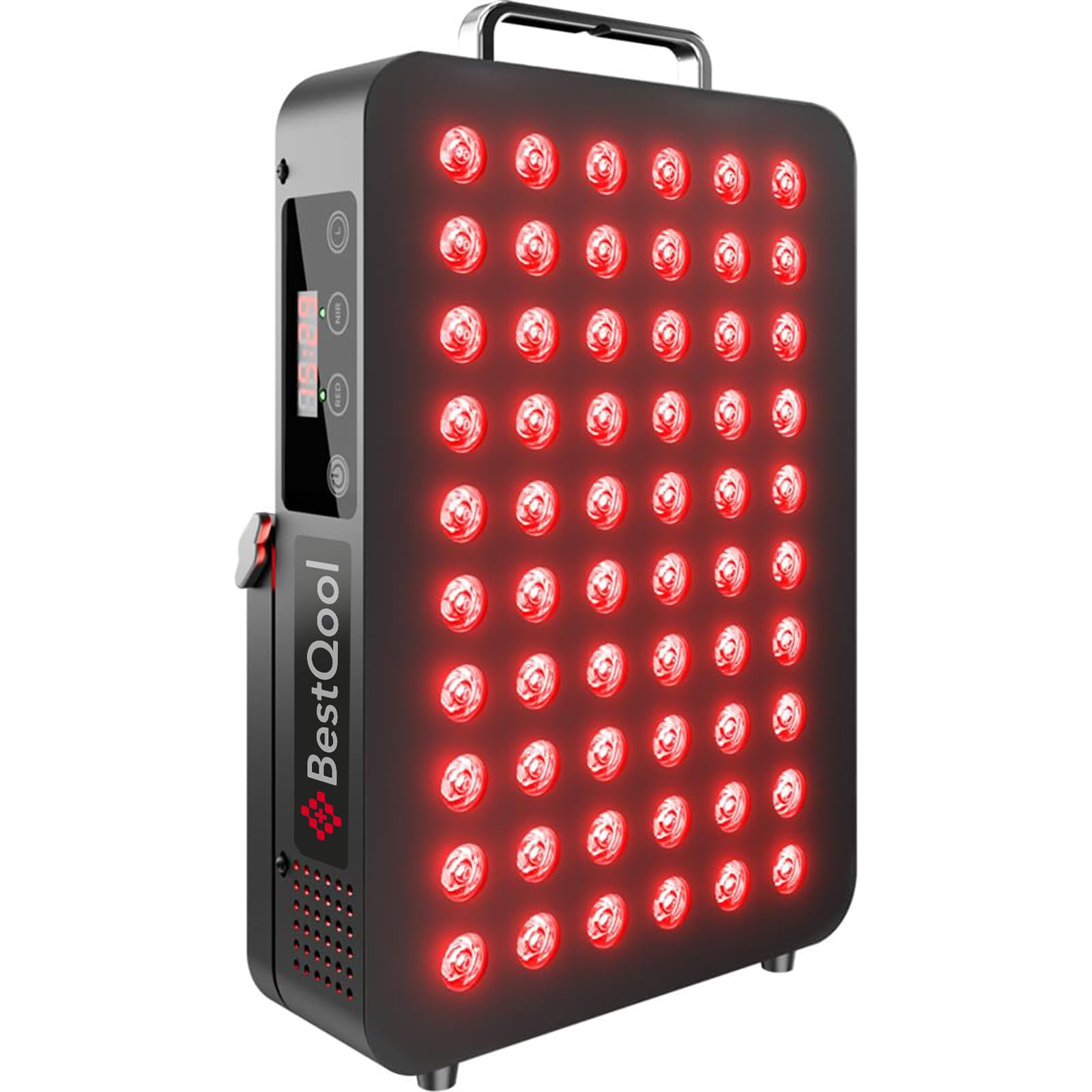
BestQool 660nm Panel
Biohacking & Longevity
Our verdict
Red only at 660nm, without the near-infrared. Simpler, usually cheaper, and enough if visible red is what you're after.
In stock · Last verified: 2026-08-28
We send you to Amazon and open your local store. A specific product may not be available in every country — if not, Amazon shows you a similar option.
Best for
- Surface-level use
- Buyers who want the simpler option
- Keeping the cost down
Not ideal for
- Anyone specifically wanting near-infrared
- Deeper-tissue applications
Pros
- Simpler single-wavelength design
- Usually cheaper than dual panels
- Well rated for build
- Straightforward to operate
Cons
- No near-infrared wavelength
- Less flexible than dual panels
- Not the choice if you want depth
Key specifications
| Wavelength | 660nm |
|---|---|
| Type | Panel |
| Near-infrared | No |
| Power | Mains cable |
| Best use | Surface-level |
Alternatives
Hooga · Hooga 660nm/850nm Panel
Combines 660nm and 850nm in one panel, the usual starting point.
Comparison →BestQool · BestQool 4-Wavelength Panel
Four wavelengths instead of two, for people who want the wider spread.
Comparison →View full analysis
Why we recommend it
Not everyone needs both wavelengths. This BestQool does 660nm visible red alone, which keeps the device simpler and the price lower than dual-wavelength panels. Red light at this wavelength penetrates less deeply than near-infrared, so it's generally the choice for surface-level use rather than anything deeper. If you don't have a specific reason to want 850nm, you're not obliged to pay for it.
Buying advice
Choose this if you know you only want visible red. If you're unsure, the small step up to a 660/850 panel keeps your options open and is the more common recommendation for a first purchase.
Frequently asked questions
- What's the difference from a 660/850 panel?
- This one omits near-infrared. Near-infrared penetrates further; visible red works closer to the surface.
- Is red-only enough?
- For surface-level use, many people find it is. If you want depth, you want the near-infrared as well.
- Is it cheaper for a reason?
- Yes, it's a simpler device with one wavelength rather than two.